
Correo electrónico : sales@topaquasystem.com
Teléfono : +86 20 8174 9697
Correo electrónico : sales@topaquasystem.com
Teléfono : +86 20 8174 9697

Water scarcity, rising energy costs, and stricter EU regulations are pushing smart plumbing system adoption across European buildings. You will see five key trends dominate the next decade: AI leak detection, greywater recycling, IoT fixtures, predictive maintenance, and sustainability mandates. Early adopters using TOPAQUA solutions gain cost savings, compliance advantages, and future-proofed assets.
Smart plumbing systems use sensors and AI to find leaks early and save water.
New EU rules and green building standards reward buildings that recycle water and use smart fixtures.
Predictive maintenance and smart tech cut costs and increase property value.
A smart plumbing system combines sensors, data analytics, and automation to manage water use in real time. You get continuous visibility into flow rate, pressure, moisture, and temperature across your entire water network.
Three core components drive every smart plumbing system:
Sensors — Detect moisture, abnormal flow, or pressure changes and send alerts.
Valves / Actuators — Automatically close or open to isolate the water supply.
Control Hub / App — Collects data, runs automation rules, and delivers alerts to you.
These sensors feed readings into a central hub or cloud platform. AI learns your building's normal water usage patterns. When readings deviate from that pattern, the system flags the anomaly immediately. Upon detecting a confirmed leak, the system triggers an automatic shutoff valve and sends a real-time smartphone alert. High-quality systems include redundant communication channels and onboard AI computation. They operate autonomously during internet or power outages.
Data analytics transforms raw sensor readings into actionable insights. Machine learning models identify what matters most, reduce false alarms, and predict potential failures before they occur. Automation then acts on those insights. Your building continuously fine-tunes itself through monitor-based commissioning.
European buildings face rising water costs, strict EU efficiency regulations, and aging infrastructure. A smart plumbing system addresses all three challenges at once. You reduce water waste, avoid costly emergency repairs, and demonstrate compliance with green building standards. Facility managers gain remote diagnostics and proactive maintenance scheduling. These capabilities cut downtime and operational costs significantly.
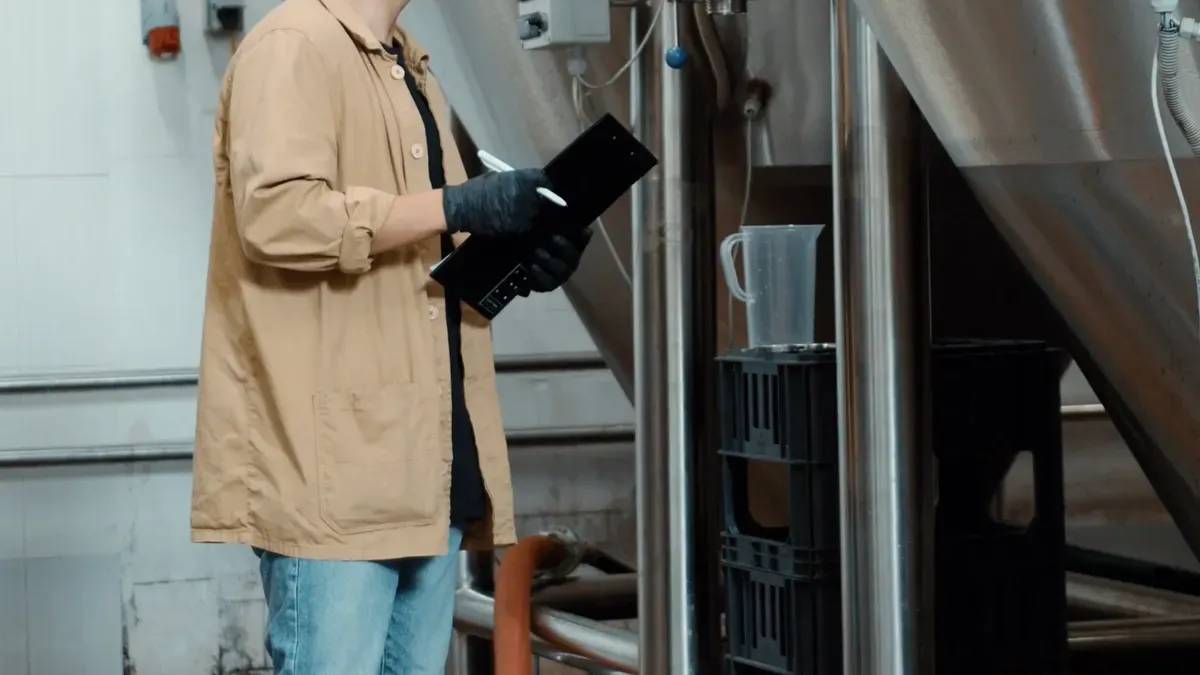
AI leak detection starts with continuous monitoring. A smart plumbing system tracks water consumption in real time, examines usage trends, and forecasts irregular behavior. The AI then identifies leaks or atypical consumption immediately and sends notifications to your phone or dashboard.
FIDO's AI tool processes acoustic recordings from small mobile sensors placed on water pipeline networks. The AI analyzes acoustic files anywhere in the world without knowing pipe material, depth, or size. Water pipes are inherently noisy, so the AI filters through that noise and determines whether a sound indicates a leak.
A manager responsible for more than 100 apartment units observed inconsistent monthly water bills. Sensors were installed on each main line, and AI was used to monitor daily usage patterns. Within one week, the system identified three ongoing micro-leaks in older units that would otherwise have remained undetected.
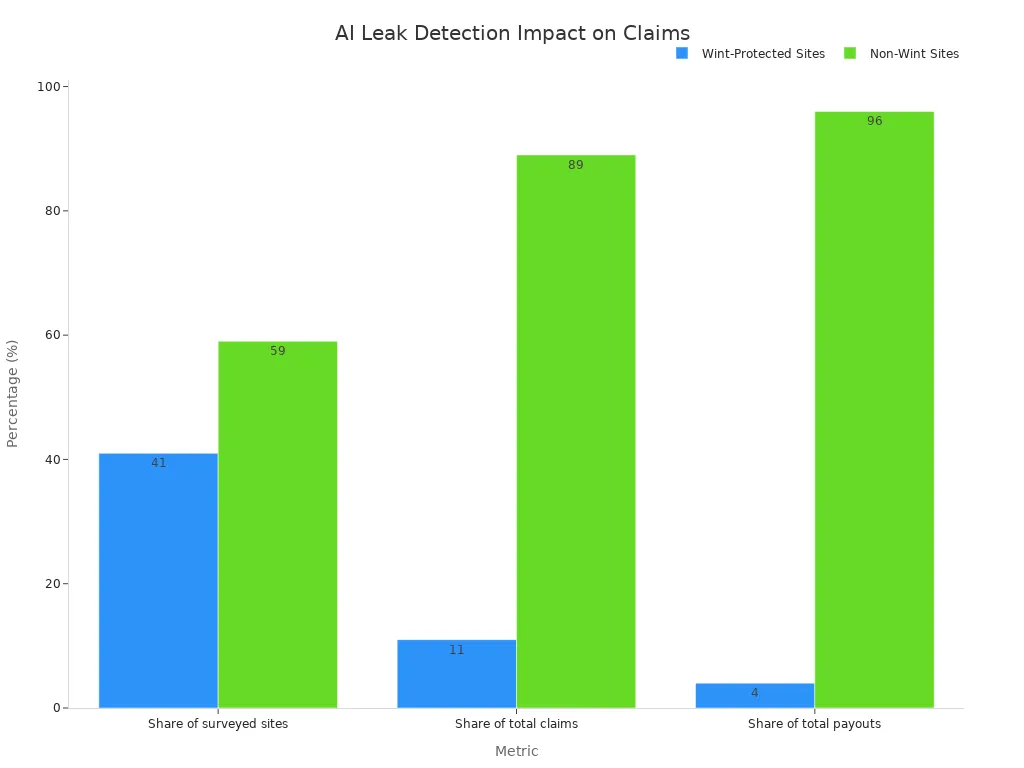
AI-powered leak detection dramatically reduces water damage claims and payouts. Consider the difference between protected and unprotected sites:
|
Metric |
Wint-Protected Sites |
Non-Wint Sites |
Reduction |
|---|---|---|---|
|
Share of surveyed sites |
41% |
59% |
— |
|
Share of total claims |
11% |
89% |
Claims down 73% |
|
Share of total payouts |
4% |
96% |
Payouts reduced 90% |
According to Alert Labs' 2026 report, 1 in 4 buildings experienced a flood alert in 2025, with 56% of those incidents occurring after hours. Over 26,000 freeze-risk alerts caught dangerous conditions before pipes burst.
European adoption of AI leak detection is accelerating. Insurers increasingly reward buildings with certified leak detection systems through lower premiums. EU water efficiency regulations push building owners toward proactive monitoring. Early adopters gain a clear competitive advantage in compliance and cost savings.
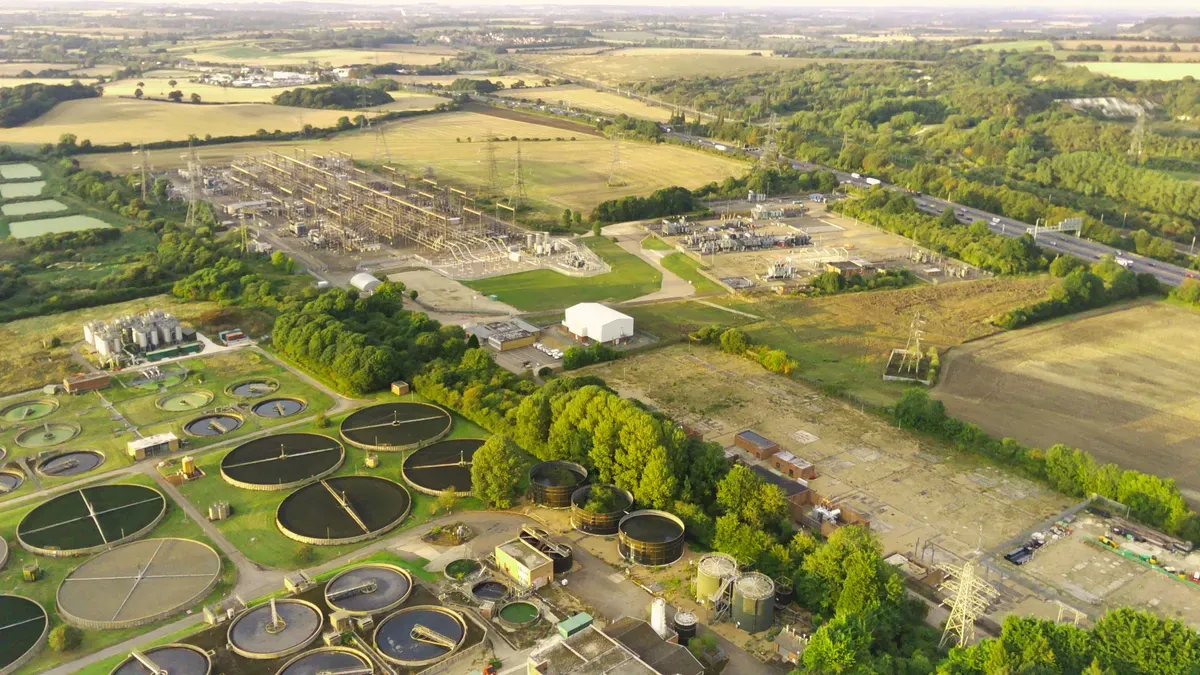
Greywater systems collect water from sinks, showers, and laundry, then treat it on-site for non-potable uses like toilet flushing and irrigation. You can choose from membrane bioreactors, constructed wetlands, or compact filtration units. These technologies remove contaminants and deliver water that meets safety standards. A smart plumbing system can monitor water quality and redirect flows automatically.
European regulations now push greywater recycling from optional to essential. The Water Reuse Regulation (EU) 2020/741 sets harmonized minimum water quality requirements, monitoring rules, and risk management provisions. It applies from June 26, 2023.
|
Regulation / Instrument |
Key Provisions |
Implementation / Status |
|---|---|---|
|
Water Reuse Regulation (EU) 2020/741 |
Harmonized water quality standards, monitoring, risk management, permitting, transparency |
Applies from June 26, 2023 |
|
Delegated Regulation (EU) 2024/1765 |
Technical specifications for risk management plans |
Supplements the Water Reuse Regulation |
|
EU Water Reuse Policy Objectives |
Encourages water reuse, addresses awareness barriers |
1 billion m³ reused annually; 6× more possible |
|
Member State Flexibility |
Allows opt-outs based on local conditions |
Some freshwater-rich states restrict reuse |
Adoption varies across member states:
Germany: 7.9% CAGR driven by strict EU policies and environmental culture.
Spain and Turkey: Prohibit untreated greywater discharge, mandating onboard treatment.
Europe overall: Fastest-growing region at 7.3% CAGR, reaching 26.1% market share by 2026.
"Mandatory water reuse regulations are transforming greywater recycling systems from optional sustainability upgrades into essential components of modern building design."
Europe reuses only about 2% of treated wastewater today. This gap signals substantial growth potential.
Greywater reuse cuts clean water consumption by 30–40%, lowering monthly bills in high-tariff urban areas. Upfront costs are significant, but long-term savings justify the investment. You also gain a backup water source during droughts, reduce sewer loads, and support SDG 6, 12, and 13. These benefits strengthen your building's resilience and sustainability profile.
IoT-connected fixtures and meters give you continuous visibility into every drop of water moving through your building. A smart water meter uses an ultrasonic or electromagnetic sensor to measure flow with high precision. Here is how the data reaches you:
A microcontroller unit inside the meter processes the collected flow data.
The meter transmits this data wirelessly via cellular, Wi-Fi, or LoRa to a central monitoring system.
The platform enables real-time monitoring, leak detection, and detailed consumption reporting.
You can track your water usage through an online portal or mobile app. The system sends alerts when it spots unusual patterns, such as a sudden flow increase. It can even shut off water remotely until you resolve the issue. This level of control turns your smart plumbing system into a proactive guardian of your building's water network.
Your IoT fixtures must talk to your Building Management System (BMS) to deliver full value. You have three main integration paths:
|
Integration Approach |
How It Works |
Protocols |
|---|---|---|
|
Direct Integration |
IoT gateway communicates directly with the BMS |
BACnet/IP, Modbus TCP |
|
Platform-Based Integration |
Sensor data goes to an IoT platform, then into the BMS |
MQTT, API |
|
Edge Data Processing |
Data processed at the edge before reaching the BMS |
Scenario-specific |
In a portfolio of over 100 residential buildings in Italy, a wireless IoT solution monitored electricity and heat consumption without intrusive cabling. Field data traveled over LoRaWAN and integrated into an existing Niagara 4 BMS via BACnet/IP. This enabled centralized visibility without altering the existing network infrastructure.
IoT devices generate sensitive data about your building's occupancy and usage patterns. You must protect this data with encrypted communication channels and strict access controls. Choose vendors who comply with GDPR requirements and offer regular firmware updates. A secure smart plumbing system protects both your building and your reputation.
Predictive maintenance uses sensor data to catch plumbing failures before they happen. Your smart plumbing system monitors flow rate, pressure, acoustic signals, and moisture levels continuously. This approach detects pipe corrosion, leak development, pump cavitation, and valve failure early. You avoid water damage, reduce water waste, and maintain compliance.
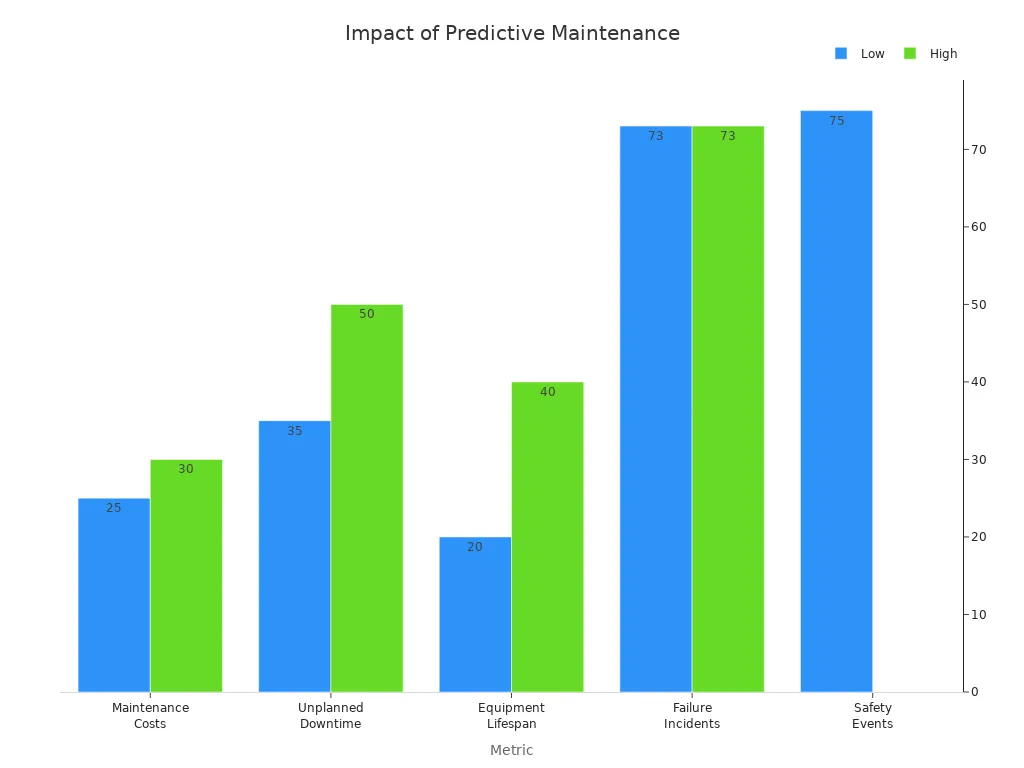
The financial impact is substantial. Predictive maintenance delivers measurable results across key performance metrics:
|
Metric |
Impact |
|---|---|
|
Reduction in overall maintenance costs |
25–30% |
|
Decrease in unplanned downtime |
35–50% |
|
Extension in equipment lifespan |
20–40% |
|
Fewer infrastructure failure incidents |
73% |
|
Reduction in equipment-related workplace safety events |
Up to 75% |
A commercial construction company installed vibration and temperature sensors on heavy machinery. This predictive approach cut downtime by 25% and saved roughly $100,000 in maintenance costs within one year.
In the hospitality industry, predictive maintenance ensures that critical systems such as HVAC, elevators, and plumbing remain operational, enhancing guest satisfaction and reducing operational disruptions.
You gain clear advantages when you adopt predictive maintenance for your building:
Condition monitoring reduces sudden machine failures by more than 50%.
Early detection cuts mean time to repair by 60%.
Machine learning extends facility machinery service life by an average of 30%.
Sensor data confirms repair success before equipment restarts.
Real-time tracking helps you plan lifecycle management and avoid costly last-minute replacements.
Efficient equipment uses less energy and produces fewer emissions.
Europe represents a mature, regulation-driven predictive maintenance market. Buildings account for 40% of European energy consumption and roughly 28% of total CO2 emissions. Faulty operations can increase building energy consumption by 20–30%.
The EU's Digital Decade policy targets 75% of EU enterprises adopting cloud, AI, or big data technologies by 2030. Germany leads with a market valuation of US$1,006 million in 2025. The United Kingdom follows at approximately US$394 million. Cloud-based platforms now expand access to SMEs, which represent 99% of EU businesses.
European regulators now treat water efficiency as a core building requirement. The Energy Performance of Buildings Directive pushes member states toward stricter water consumption targets. You must document your building's water performance to secure permits and avoid penalties. A smart plumbing system gives you the real-time data these regulations demand.
BREEAM and DGNB reward buildings that monitor and reduce water use. You earn credits for leak detection, greywater recycling, and efficient fixtures. These certifications signal environmental responsibility to tenants and investors. Your building gains a measurable edge in sustainability ratings when you install connected monitoring tools.
Smart plumbing technology directly boosts property value. Buyers and tenants now expect efficient, tech-enabled buildings. Insurers increasingly cover and advocate for these systems, which lowers risk and operating costs.
|
Metric |
Result |
|---|---|
|
Water waste reduced |
7.5 million gallons over 12 months |
|
Cost savings |
More than $100,000 |
|
Carbon emissions reduced |
More than 300 metric tons per year |
|
ROI period |
Returned investment within 3 months |
These savings demonstrate lifecycle value to lenders and appraisers. You can build them into estimates that justify higher valuations. Properties with automated leak detection often qualify for reduced insurance premiums. That financial advantage compounds over time and strengthens your asset's market position.
You need specialized skills to install and maintain modern water systems. Advanced certifications in smart water systems, gas fitting, green pipefitting, and water treatment open higher-paying roles. Training in sustainability and green technology prepares you for energy-efficient projects. These modules cover eco-friendly water systems and smart infrastructure. Demand for these skills grows every year.
|
Skill/Training Area |
Description |
|---|---|
|
Advanced Certifications & Specialized Training |
Specialization in smart water systems, gas fitting, green pipefitting, and water treatment. Certifications lead to higher-paying roles and improved expertise for residential and commercial projects. |
|
Sustainability & Green Technology |
Training in eco-friendly water systems and smart infrastructure. Modules prepare professionals for energy-efficient, sustainable initiatives, which are increasingly in demand. |
You should select licensed, insured professionals for installation. Verify that technicians hold certification for the specific smart plumbing system they install. Confirm proper placement, orientation, and calibration of valves and flow meters. Check that the installation meets local plumbing codes and permit requirements. Assess how the system integrates with other smart devices for unified, secure operation. Ask about Wi-Fi reliability, electrical outlet availability, vendor subscription terms, and BMS compatibility. Prefer systems that do not need the corporate network, because IT departments may deem connected plumbing too risky.
Follow a structured process to future-proof your building:
Design for scalability. Run conduits and wiring for future upgrades, and use centralized panels.
Choose compatible platforms. Systems should work with a common hub, and you should avoid mixing incompatible systems.
Hide technology seamlessly. Run wiring behind walls and place sensors discreetly.
Build in reliability and redundancy. Choose robust components, UPS units for central hubs, and backup connectivity.
Conduct plumbing audits to prioritize fixtures with the fastest payback. Install pressure-reducing valves to keep the network at 40–60 psi. Upgrade to smart, low-flow fixtures to cut potable water use by as much as 45%.
TOPAQUA delivers a complete smart plumbing system that combines precision sensors, automatic shutoff valves, and an intuitive control platform. You gain real-time visibility into flow, pressure, and moisture across your entire water network. The system detects anomalies within seconds and isolates the affected zone before damage spreads. TOPAQUA hardware operates autonomously during power or internet outages, so your building stays protected at all times. The platform integrates seamlessly with leading Building Management Systems through BACnet/IP and Modbus TCP protocols. You avoid costly retrofits because TOPAQUA devices support both wired and wireless deployment. Facility managers receive actionable alerts through a mobile app, which cuts response times and reduces emergency repair costs. The modular design lets you start with a single riser and scale across an entire portfolio without replacing existing infrastructure.
TOPAQUA aligns directly with the EU Water Reuse Regulation (EU) 2020/741 and the Energy Performance of Buildings Directive. The system generates the documented water performance data you need for permits and audits. TOPAQUA supports BREEAM and DGNB credit requirements for leak detection and water monitoring. Insurers recognize TOPAQUA certification and often reward your building with lower premiums. The platform stores data securely and complies with GDPR standards, which protects both your tenants and your reputation. You gain a future-proofed asset that meets today's mandates and adapts to tomorrow's regulations.
Smart plumbing systems are becoming the standard in European buildings. The five trends—AI leak detection, water recycling, IoT fixtures, predictive maintenance, and sustainability mandates—will define the next decade. Regions with stringent energy codes and sustainability mandates lead adoption. Early adopters using TOPAQUA gain cost, compliance, and reputational advantages. Start with audits, pilot projects, and upskilling now.
A smart plumbing system uses sensors, data analytics, and automation to monitor water flow, detect leaks, and control your building's water network in real time.
Costs vary by building size and features. You typically recover the investment within months through water savings, lower insurance premiums, and reduced repair bills.
Yes. You can install wireless sensors and smart valves without major construction. Modular designs let you start small and scale across your property over time.


Síganos
Derechos de autor
© 2026 CONTROL DE FLUJO DE AGUA SUPERIOR CO., LTD. Reservados todos los derechos
.
 RED SOPORTADA
Blog Mapa del sitio Xml política de privacidad
Dejar un mensaje
Escanear a WeChat :


 EN
 ES